Marine biology is the scientific study of organisms in the ocean or other marine or brackish bodies of water. Given that in biology many phyla, families and genera have some species that live in the sea and others that live on land, marine biology classifies species based on the environment rather than on taxonomy. Marine biology differs from marine ecology as marine ecology is focused on how organisms interact with each other and the environment, and biology is the study of the organisms themselves.
Marine life is a vast resource, providing food, medicine, and raw materials, in addition to helping to support recreation and tourism all over the world. At a fundamental level, marine life helps determine the very nature of our planet. Marine organisms contribute significantly to the oxygen cycle, and are involved in the regulation of the Earth's climate.
Marine biology is a branch of oceanography and is closely linked to biology. It also encompasses many ideas from ecology. Fisheries science and marine conservation can be considered partial offshoots of marine biology (as well as environmental studies).
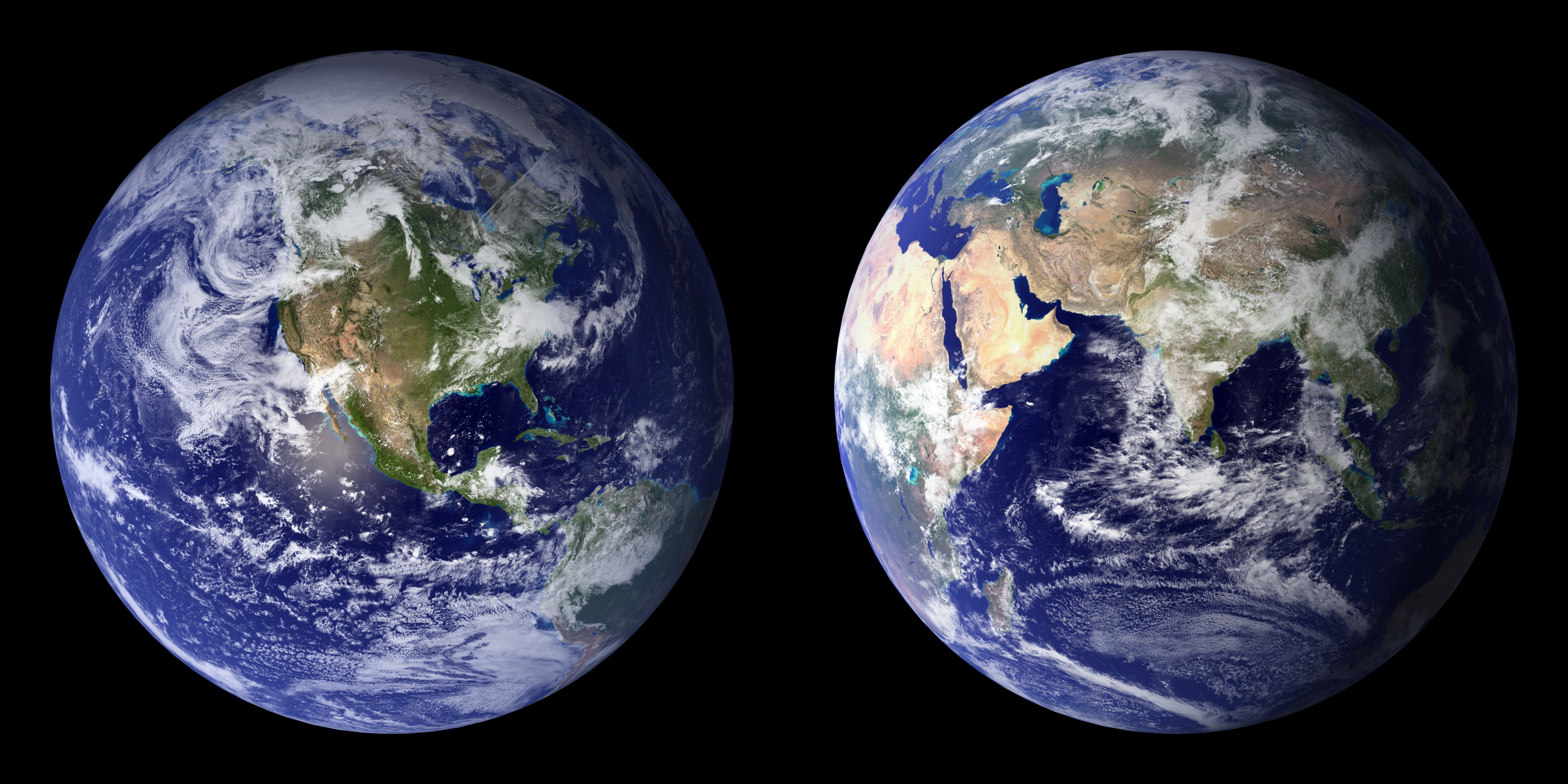
http://en.wikipedia.org/wiki/File:BlueMarble-2001-2002.jpg
Marine Life
Here's a way to see Marine Life, as it currently is being destroyed and we must understand about this issue and be aware of our actions towards it.
martes, 23 de agosto de 2011
Ecosystem of Marine Life
Marine Ecosystems are within aquatic ecosystems. Including the oceans, seas, swamps, etc.. Life arose and evolved in the sea. The marine environment is very stable when compared to terrestrial habitats and freshwater. The temperatures of the ocean masses vary only slightly, and salinity (3.5%). The ionic composition of seawater is similar to body fluids of most marine organisms, which solves the osmotic regulation.
Domains:
Domain benthic or sea floor: The substrate, the seabed (rock, rocky, sandy, muddy). Populated by benthic organisms.

Domains:
- We can distinguish two domains in marine ecosystems: the domain pelagic and benthic domain.
Domain benthic or sea floor: The substrate, the seabed (rock, rocky, sandy, muddy). Populated by benthic organisms.
- Photic region:
- Supralittoral zone: Region of splashing, coastal part, without terrestrial vegetation, or just kind of desert.
- Mesolittoral Zone: intertidal region, with alternating exposed to air and submerged by the sea, seaweed.
- Sublittoral zone: Region permanently submerged, on the Continental Shelf International, to where there is vegetation benthic algae.
- Aphotic region:
- Circalittoral area.
- Bathyal.
- Abyssal zone.
- Hadal zone.
Census of Marine Life
The Census of Marine Life was a global network of researchers in more than 80 nations engaged in a 10-year scientific initiative to assess and explain the diversity, distribution, and abundance of life in the oceans. The world's first comprehensive Census of Marine Life — past, present, and future — was released in 2010 in London.
The International Census of Marine Life, is a global effort of 80 nations and 2700 scientist who, after 10 years of research, 540 expeditions and over 650 millions dollars invested, provide conclusive results on the projections marine life and the effect on the humanity of their use is view of climate change and other impacts.
The Census consists of three major component themes organized around the questions:
The global initiative required a state-of-the-art data assimilation framework, and this effort, the Ocean Biogeographic Information System (OBIS), forms the fourth component program of the Census.
http://en.wikipedia.org/wiki/File:Census_Of_Marine_Life_Logo.jpg
The International Census of Marine Life, is a global effort of 80 nations and 2700 scientist who, after 10 years of research, 540 expeditions and over 650 millions dollars invested, provide conclusive results on the projections marine life and the effect on the humanity of their use is view of climate change and other impacts.
The Census consists of three major component themes organized around the questions:
- What has lived in the oceans?
- What does live in the oceans?
- What will live in the oceans?
The global initiative required a state-of-the-art data assimilation framework, and this effort, the Ocean Biogeographic Information System (OBIS), forms the fourth component program of the Census.
http://en.wikipedia.org/wiki/File:Census_Of_Marine_Life_Logo.jpg
Marine Species
Mammals: There are five main types of marine mammals.
- Cetaceans include toothed whales (Suborder Odontoceti ), such as the Sperm Whale , dolphins , and porpoises such as the Dall's porpoise.
- Sirenians include manatees , the Dugong , and the extinct Steller's Sea Cow.
- Seals (Family Phocidae ), sea lions (Family Otariidae - which also include the fur seals), and the Walrus (Family Odobenidae ) are all considered pinnipeds.
- The Sea Otter is a member of the Family Mustelidae , which includes weasels and badgers.
- The Polar Bear (Family Ursidae ) is sometimes considered a marine mammal because of its dependence on the sea.
Reptiles: Reptiles which inhabit or frequent the sea include sea turtles , sea snakes , terrapins , the marine iguana , and the saltwater crocodile.
Invertebrates: Invertebrate sea life includes Cnidaria such as jellyfish and sea anemones ; Ctenophora ; sea worms including the phyla Platyhelminthes , Nemertea , Annelida , Sipuncula , Echiura , Chaetognatha.
Fish: Well known fish include: sardines, anchovy, ling cod, clownfish (also known as anemonefish), and bottom fish which include halibut or ling cod . Predators include sharks and barracuda.
Birds: Birds adapted to living in the marine environment are often referred to as seabirds. Examples include albatross, penguins, gannets, and auks.
miércoles, 27 de julio de 2011
Loss of Marine Life
Causes:
Another cause is global warming, causing the temperature of the sea level rise, thus affecting coral reefs and the balance of these areas.Contamination: Because thousands of people are supplied with this resource, it is noteworthy that the lack of Appreciation makes human beings aware of their acts, since the same, throw tons of waste a year at sea, seeing so the ocean, a dumping ground for humanity, without being conscious of the effects for posterity.
Since the start of fishing, was linked to profits but also to curses. All this because the human being, the greatest threat to this type of marine ecosystem. This is the main cause of the loss of marine life.
Over the years, fishing was increasing to the point where, today, has led to overfishing and almost extinction of several aquatic pespecies.
Suscribirse a:
Comentarios (Atom)
